Why the sudden drop in estrogen during perimenopause drastically changes a woman's cardiovascular risk profile, and how to protect your heart.
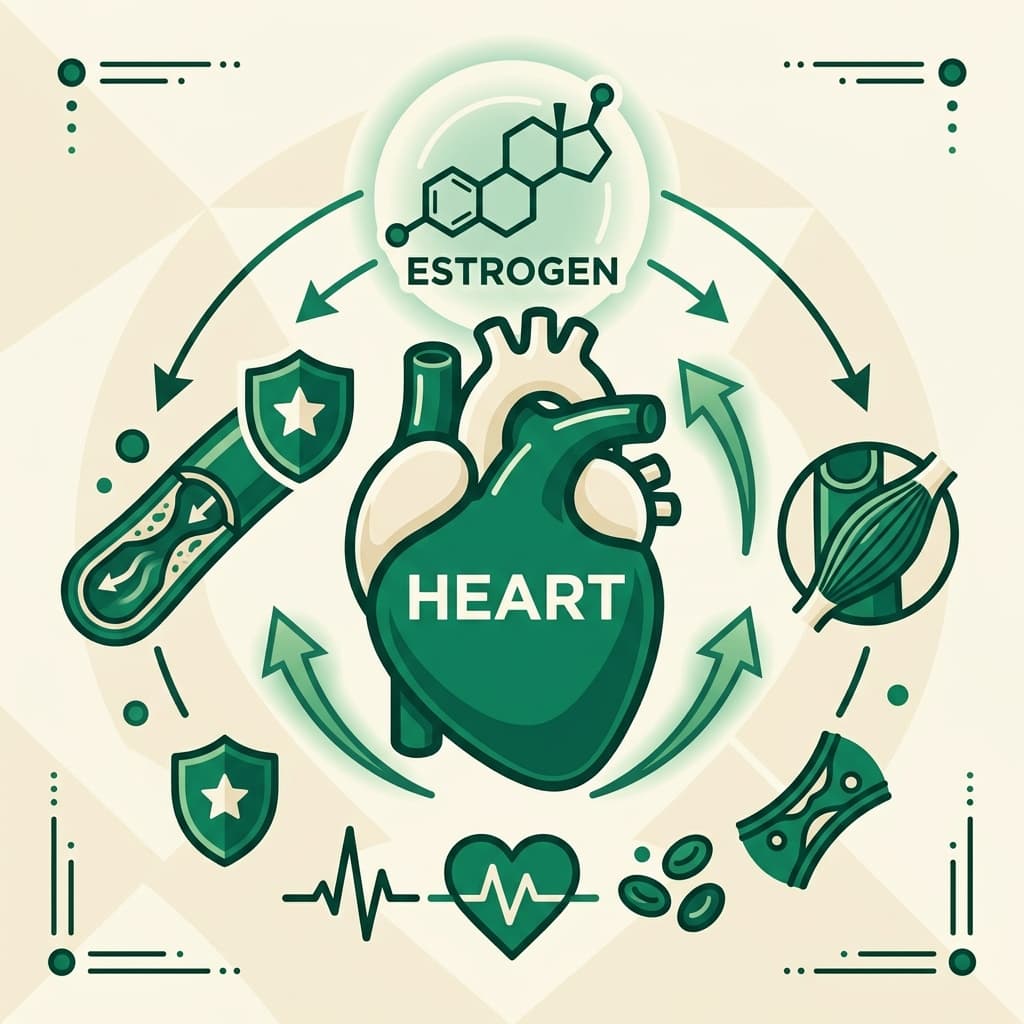
The Invisible Shield
For decades, women have a biological advantage over men when it comes to cardiovascular health. But around the age of 50, that advantage suddenly vanishes. Heart disease becomes the number one killer of women.
The culprit? The sudden drop in estrogen.
How Estrogen Protects the Heart
Estrogen is not just a reproductive hormone; it is a master regulator of cardiovascular health. It acts as an invisible shield for your heart and blood vessels through several key mechanisms:
- Vascular Flexibility: Estrogen keeps the endothelial cells (the inner lining of blood vessels) flexible and healthy. It promotes the release of nitric oxide, which dilates blood vessels and keeps blood pressure low.
- Lipid Profile Management: Estrogen naturally raises HDL (the "good" cholesterol) and lowers LDL (the "bad" cholesterol).
- Anti-Inflammatory Action: It reduces systemic inflammation, preventing the buildup of arterial plaque.
The Menopause Vulnerability
When estrogen levels plummet during the menopausal transition, this shield is dropped. Blood vessels stiffen, blood pressure often rises, and the lipid profile flips—LDL goes up, and HDL goes down.
This transition represents a critical window of vulnerability. The metabolic shift that occurs during perimenopause requires a proactive strategy to maintain cardiovascular health for the second half of life.
Research Facts
- Fact 1: The risk of cardiovascular disease in women increases significantly after menopause, largely due to the loss of estrogen's protective effects on the vascular endothelium.
- Fact 2: Estrogen deficiency leads to adverse changes in lipid metabolism, including increased levels of LDL cholesterol and triglycerides.
- Fact 3: Early initiation of Hormone Replacement Therapy (HRT) in the menopausal transition has been shown to reduce cardiovascular mortality and the progression of atherosclerosis.
Scientific References
- Mendelsohn, M. E., & Karas, R. H. (1999). "The protective effects of estrogen on the cardiovascular system." New England Journal of Medicine.
- Rosano, G. M., et al. (2007). "Menopause and cardiovascular disease: the evidence." Climacteric.
Sources & Citations
- [1]Mendelsohn, M. E., & Karas, R. H. (1999). The protective effects of estrogen on the cardiovascular system.
- [2]Rosano, G. M., et al. (2007). Menopause and cardiovascular disease: the evidence.